History
Campbell grew up around a ranch, a railroad stop and some of the biggest fruit-drying yards in the world. For decades it was the Orchard City, a small town of canneries and packing houses in the middle of the Santa Clara Valley’s orchards.

A short history of Campbell
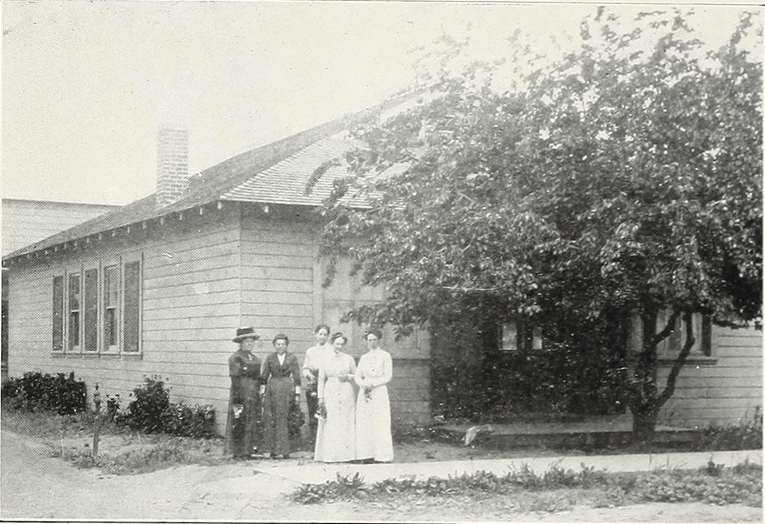
Campbell grew up around a ranch, a railroad stop and some of the biggest fruit-drying yards in the world. For decades it was the Orchard City, a small town of canneries and packing houses in the middle of the Santa Clara Valley’s orchards. It became a city in 1952, and the orchards gave way to homes. This page tells that story in short, with a link to the source for every claim. For the full texts of the old books, see the reading list.
The first people and the corner of the cats
Before the town, this land was home to the Ohlone, the Native American people of the Northern California coast [1]. The Campbell Museums acknowledge the city as the ancestral homeland of the Muwekma Ohlone [6]. In 1840 the Mexican governor Juan Alvarado granted Rancho Rinconada de Los Gatos to José María Hernández and Sebastián Peralta [2]. Its name means “corner of the cats,” after the cougars in the hills above [2]. About a third of present-day Campbell lay inside the grant, whose northern line ran along today’s Rincon Avenue [1] [2]. Older still is the Galindo-Leigh House on Peter Drive, which began as a cottage in the 1830s and may be the oldest home in Campbell [9].
The Campbells arrive, 1846-1851
William Campbell, born in Kentucky in 1793, crossed the plains to California in 1846 with his family, almost three years ahead of the gold seekers [3]. With his sons David and Benjamin he built the first sawmill in the county, to cut the redwoods, and in 1847 he built his own threshing machine [3]. In the spring of 1851 Benjamin Campbell bought 160 acres on what became Campbell Avenue and grew hay and grain there [1] [3]. He married Mary Rucker on Christmas Day, 1851, and brought her west the next year [3]. His claim began as a squatter’s right, and he fought for it in the courts for eighteen years before he secured a federal patent [3]. Foote’s history of 1888 calls him the first permanent settler of the Hamilton District [3].
The railroad and a town on paper, 1877-1887
The narrow-gauge South Pacific Coast Railroad, built with money from the Comstock silver fortune of James Fair, began running through Benjamin Campbell’s land in 1877 [5]. Its first stop here was a flag stop called Lovelady [8]. In 1886 Campbell deeded an acre for a depot, and a little telegraph office, six feet by eighteen, opened where Orchard City Drive now crosses the tracks [5]. The station was known as Campbell by 1890 [8]. Benjamin and Mary Campbell set up the first post office in their own home, and Benjamin was its postmaster [3] [18]. In 1887 the first subdivision was recorded west of the railroad, and the settlement known as Campbell’s Place began to grow into a town [1].
Drying yards and canneries, 1887-1930
The railroad brought the fruit business. In 1887 the Fleming brothers built a drying works beside the tracks; that first season they employed about 700 people and handled 1,800 tons of apricots and more than 2,500 tons of other fruit [3] [5]. In 1892 local growers formed the Campbell Fruit Growers’ Union, a cooperative that took over 16 acres of drying yards [5]. As the Campbell Museums put it, the canneries were built here because of the railroad, not the other way round [6].
John Colpitts Ainsley, an English immigrant, came to Campbell in 1886 and worked in the drying yards before experimenting with canning on his ranch [5]. By 1891 his “wash boiler cannery” packed a thousand cases under the Mikado label, and in 1892 he moved it beside the tracks at Harrison Avenue [5]. He sold nearly all of his fruit in England and is credited with being the first to market fruit salad [6]. His cannery had 500 workers by 1902; after the strikes of 1917 he gave his workers an eating house, a nurse, cheap hot lunches and a kindergarten [6].
George E. Hyde bought the growers’ union plant and turned it into a cannery and drying yard [5] [6]. Other plants followed: the Orchard City Canning Company, run by Perley Payne from about 1910, won a bronze medal at the 1915 Panama-Pacific Exposition before the First World War cut off its market in Germany [19]. In 1922 Sawyer’s county history described a town of about 1,200 people with three canneries and a cooperative drying plant that it called the largest in the world [4].
A town of its own, 1892-1930
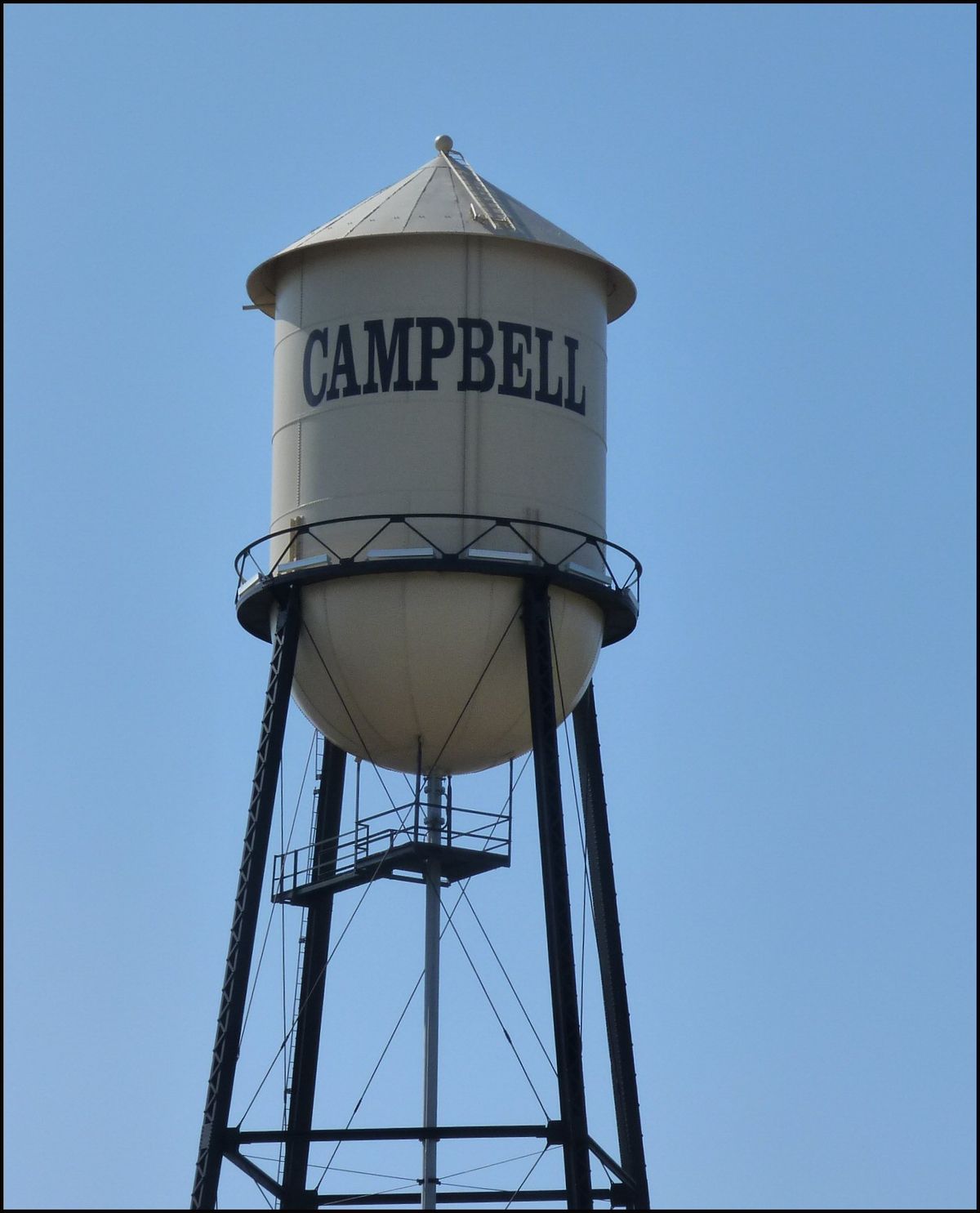
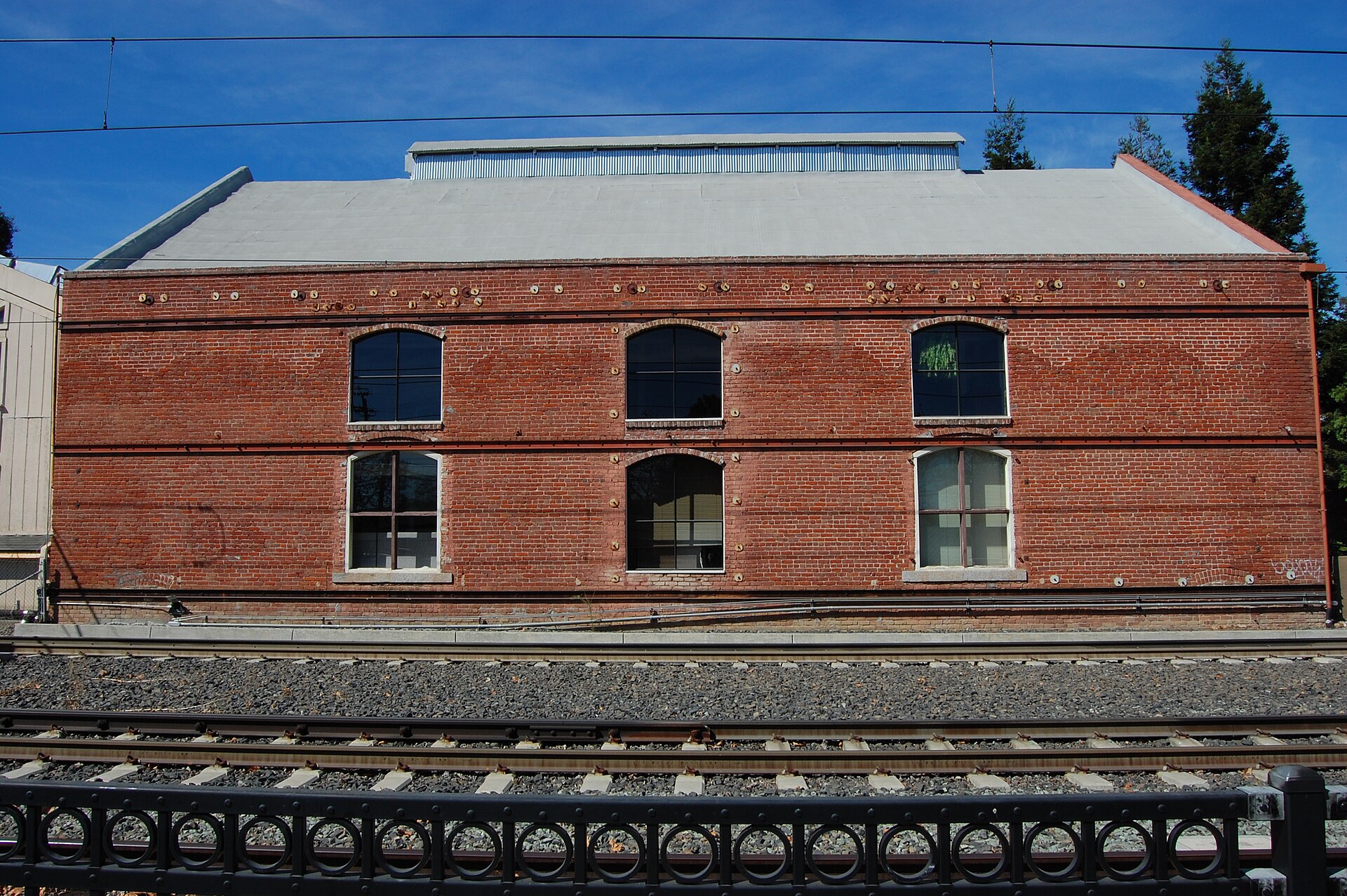
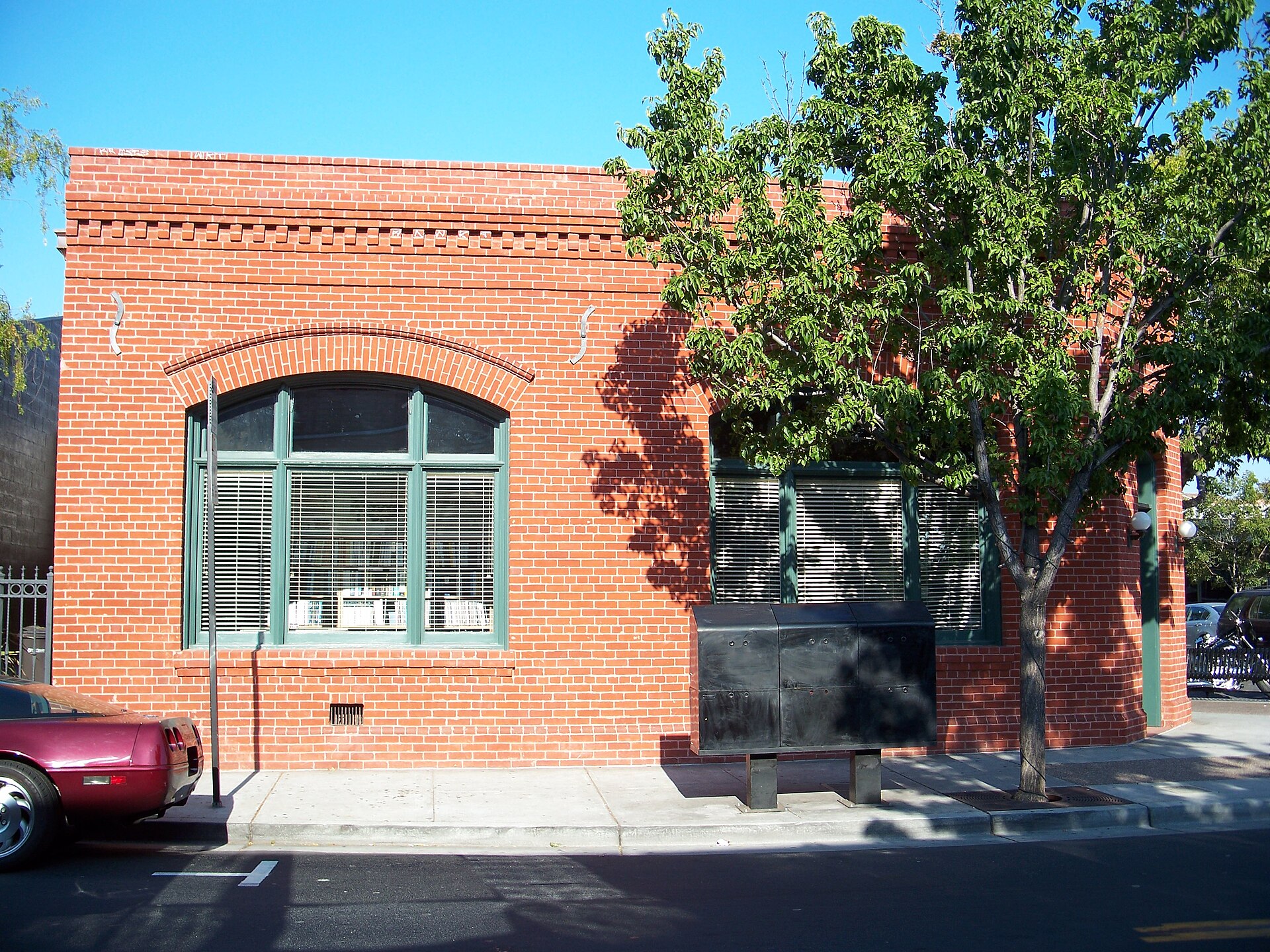
The Campbell Water Company, the town’s first utility, was formed in 1892 [5]. The 1906 earthquake knocked down its wooden tanks; the steel tower that still stands over downtown went up in 1928 [5]. The brick First Bank of Campbell, built in 1895, is the oldest commercial building in town [5]. Campbell Union High School opened on September 14, 1900, with 35 students [11]. On May 11, 1903, President Theodore Roosevelt stopped in Campbell and planted a coast redwood on the high school’s site [7]. The Country Woman’s Club, founded in 1905, provided the town’s library and in 1923 built its clubhouse on East Campbell Avenue [5]. The volunteer fire department began in the 1910s, and in the 1930s its firemen rode bicycles to fires so they could cut through the orchards [7] [9].
Sunsweet and the cooperatives, 1909-1971
Growers kept trying to market their own fruit. The Campbell Farmers Union Packing Company formed in 1909 and built Campbell’s first three-story building in 1912 [6]. The statewide California Prune and Apricot Growers Association, whose brand was Sunsweet, bought it in 1919 [6]. Hyde’s cannery closed in the Depression, and Sunsweet took over the old Hyde site from 1937 until 1971 [5] [6]. Ainsley leased his cannery to the Drew Canning Company in 1933 [5]. In 1937 about fifty growers built the Campbell Cooperative Dryer; by 1948 its forty-eight tunnels made it the largest dehydrator in the world [6].
The Ainsleys’ last home
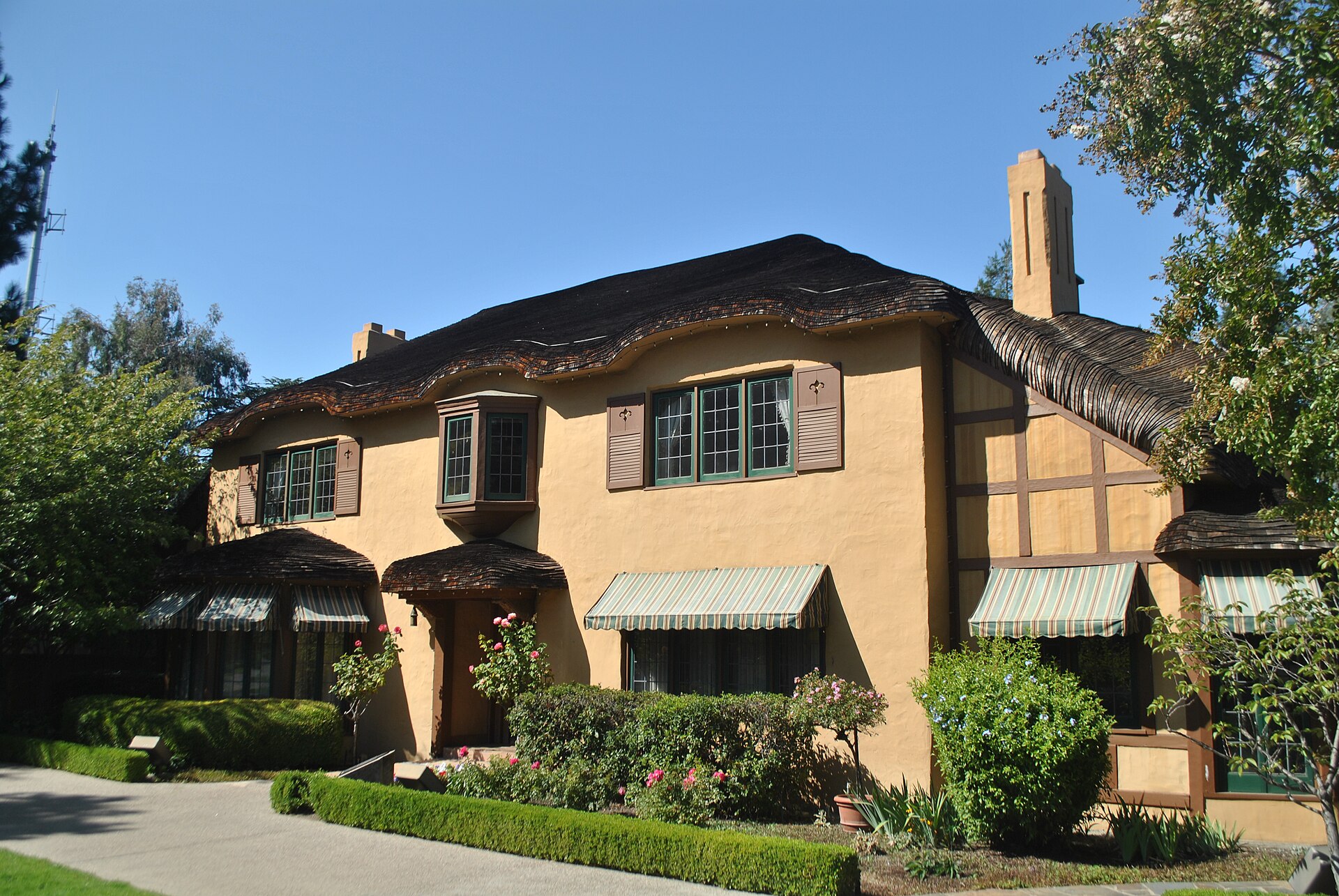
In 1925 J. C. and Alcinda Ainsley built their third home, an English Cotswold-style cottage, on their 83-acre orchard at Hamilton and Bascom Avenues [10]. After Ainsley died in 1937 it stood mostly empty but well kept for decades [10]. The family gave the house, its furnishings and its carriage house to the city in 1989, and they were moved to 300 Grant Street, downtown, in 1990 [10]. The house was listed on the National Register of Historic Places in 2005 [10].
The Orchard City becomes a city, 1952-1980
Campbell incorporated in 1952, and the city grew fast as the orchards disappeared, tract by tract [1]. Its first city hall, police station and fire station shared the firehouse built in 1951 on Central Avenue [5]. In 1962 a Little League team of 11- and 12-year-olds from Moreland, which served Campbell and San Jose, won the Little League World Series, the only Northern California team ever to do so [15]. The Campbell Historical Museum opened in 1964, started by the Country Woman’s Club [17]. Developer Fred Sahadi bought the Brynteson Ranch in 1968 and built the PruneYard shopping center, completed in 1970 [12]. Campbell High School closed in 1980 [11].
The PruneYard case, 1980
In the late 1970s the PruneYard was drawn into a free-speech dispute with local high school students. The case reached the U.S. Supreme Court, which ruled on June 9, 1980, that California could protect peaceful free speech in the public areas of private shopping centers under its own constitution [12].
Campbell today
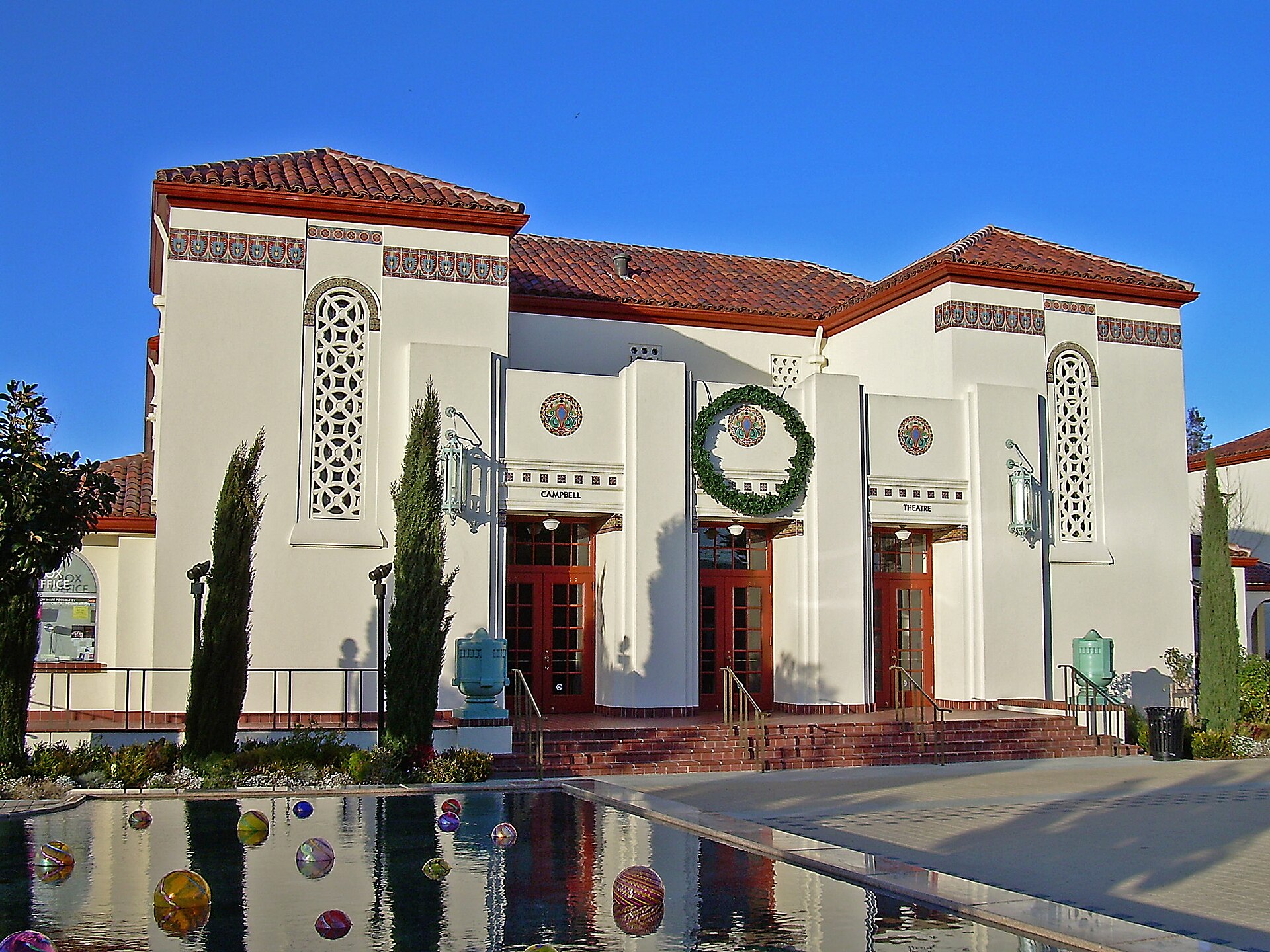
The city bought the old high school campus in 1985 and made it the Campbell Community Center [11]. Its 1938 auditorium, designed by William H. Weeks, stood dark for twenty years before volunteers saved it; it reopened as the Heritage Theatre in 2004 [16]. The Historical Museum moved into the old firehouse in 1983 [17]. The Los Gatos Creek Trail through Campbell was completed in 1990 [7], and it now runs 9.7 miles from Lexington Reservoir to San Jose [20]. Roosevelt’s redwood was cut down in 1964, but a Campbell Garden Club member saved its stump, and the tree that grew from it stands at Vasona Lake County Park [21]. The May festival that began as the Prune Festival in the late 1970s is now Boogie, Campbell’s music festival [13]. Since 2016 the water tower has been lit with colored LED lights [14]. The Dubcich farm on West Campbell Avenue, with its 1920s farmhouse, barn and fruit trees, is the last working link to the orchards [1].
Key dates
01
1840
The corner of the cats
Rancho Rinconada de Los Gatos is granted; about a third of today’s Campbell lies inside it. Source ↗
02
1851
Benjamin Campbell’s ranch
Benjamin Campbell buys land on what becomes Campbell Avenue and plants hay and grain. Source ↗
03
1877
The railroad
The narrow-gauge South Pacific Coast Railroad begins running through the Campbell land. Source ↗
04
1887
A town and a drying yard
The first subdivision is recorded, and the Fleming brothers open their fruit-drying works by the tracks. Source ↗
05
1891
The Ainsley cannery
J. C. Ainsley’s wash boiler cannery packs a thousand cases under the Mikado label. Source ↗
06
1892
Growers and water
Orchardists form the Campbell Fruit Growers’ Union, and the Campbell Water Company becomes the town’s first utility. Source ↗
07
1900
A high school
Campbell Union High School opens on September 14 with 35 students. Source ↗
08
1903
Roosevelt’s redwood
President Theodore Roosevelt visits on May 11 and plants a coast redwood. Source ↗
09
1925
The Ainsley House
The Ainsleys build their Cotswold-style cottage on their orchard at Hamilton and Bascom. Source ↗
10
1928
The water tower
The water company puts up the steel tower and its 75,000-gallon tank. Source ↗
11
1948
The largest dehydrator
The Campbell Cooperative Dryer reaches forty-eight tunnels, the largest dehydrator in the world. Source ↗
12
1952
A city
Campbell incorporates, and the orchards give way to housing tracts. Source ↗
13
1962
World champions
Moreland Little League, serving Campbell and San Jose, wins the Little League World Series. Source ↗
14
1970
The Pruneyard
The PruneYard shopping center is completed on the old Brynteson Ranch. Source ↗
15
1980
PruneYard v. Robins
The U.S. Supreme Court decides the free-speech case on June 9. Source ↗
16
1990
The Ainsley House moves downtown
The house and carriage house are moved to Grant Street, and the creek trail through Campbell is completed. Source ↗
17
2004
The Heritage Theatre reopens
The 1938 high school auditorium reopens after twenty dark years. Source ↗
Sources
1. Campbell, California — Wikipedia
2. Rancho Rinconada de Los Gatos — Wikipedia
3. Pen Pictures from the Garden of the World (H. S. Foote, ed., 1888) — Internet Archive
4. History of Santa Clara County, California (Eugene T. Sawyer, 1922) — Internet Archive
5. Campbell Historic Downtown Walking Tour — City of Campbell
6. A Self-Guided Tour of the Canneries of Campbell — Campbell Museums
7. City of Campbell Plaque Locations — City of Campbell
8. Downtown Campbell station — Wikipedia
9. This Place Matters — City of Campbell Historic Preservation Board
11. Campbell High School (California) — Wikipedia
12. Pruneyard Shopping Center — Wikipedia
13. From Prunes to Pop Music — Campbell Chamber of Commerce, 2023
15. One for the Ages — Campbell Patch, 2012
16. Heritage Theatre Seeking Board Members — Campbell Chamber of Commerce, 2022
17. Campbell Historical Museum — Wikipedia
18. History of Campbell — Campbell Chamber of Commerce
19. Orchard City Canning Company — Packing Houses of Santa Clara County
Further reading
Pen Pictures from the Garden of the World, or Santa Clara County, California, H. S. Foote (editor) (1888) — public domain, free to read online
History of Santa Clara County, California, Eugene T. Sawyer (1922) — public domain, free to read online
History of Santa Clara County, California, J. P. Munro-Fraser (1881)
Campbell (Images of America), Campbell Historical Museum & Ainsley House, Karen Brey (2004) — borrow it from the Internet Archive
Campbell, the Orchard City, Jeanette Watson (1989) — borrow it from the Internet Archive
The Last Baseball Town, Chuck Hildebrand (2009) — borrow it from the Internet Archive
Teddy Roosevelt in California, Chris Epting (2013) — borrow it from the Internet Archive
Passing Farms, Enduring Values: California’s Santa Clara Valley, Yvonne Jacobson (1984) — borrow it from the Internet Archive
Sunshine, Fruit and Flowers: Santa Clara County, California, San Jose Mercury (1895) — borrow it from the Internet Archive
Campbell Interurban Press (newspaper, 1904–1910 issues), Campbell Interurban Press (1904)